This is our third year stewarding the land in Dulwich Park.
Building on the legacy of this long-established growing space, we have transformed it into a thriving community hub and cultural food-growing space that centres global majority communities and strengthens connections to land, food and ecological knowledge.
As one of the few Black-led gardens in London, we steward the space as a place for our communities to learn, grow and gather. Through free training in food education, land-based skills, ecological knowledge and wellbeing activities, we create opportunities for connection, cultural-exchange, collective learning and care.
-
Each year since stewarding the site, we have developed the garden to increase food-growing capacity, improve year-round growing spaces, welcome larger groups and create new wildlife habitats. A huge thank you to Bill for leading the planning and construction across every phase of the site’s development as well as Harry and Kieron for their invaluable support throughout each build. None of this would have been possible without them.
We are also greatful to our funders and donors for their support in helping grow the garden. See below for more detailed overview of each phase of the gardens development.
-
Our approach to land stewardship is maintaining simplicity. We focus on growing as naturally as possible with as few synthetic or purchased options as possible. We are influenced by the land strategies and spiritual connection with land outlined in Leah Penniman’s book Farming While Black, Masanobu Fukuoka ‘do nothing’ philosophy of natural farming approach, Charles Dowding's teachings on no-dig gardening, Rastafari livity for it’s spiritual conduct toward land cultivation and collective-determination. As well as countless other land stewardship practices from our ancestors, cultural-exchanges in the garden.
In daily practice, we collect and store rainwater, use olas and drip irrigation to reduce water use and prevent runoff. We minimise soil disturbance to protect soil structure and use living mulches, inter and relay cropping to support moisture retention, biodiversity and overall soil health. We save and exchange seed or focus on purchases from UK-based suppliers with emphasis on organic heirloom-vairety seeds. We use the lunar calendar to guide planting and rest periods on the land.
We build and feed our soil through composting and living soil systems, using green and brown waste collected from the park and local businesses. We avoid synthetic inputs, instead focusing on strengthening long-term fertility and resilience through natural processes.
We prioritise closed-loop, local systems wherever possible. This includes using reclaimed or durable materials in our growing spaces and avoiding reliance on large corporate suppliers by sourcing from smaller businesses and local suppliers. This often means waiting for what we “need.” We try to keep our growing cycles grounded, local and self-sustaining.
We take a fallow period each winter to mirror the cycles of the land.
-
We harvest hundreds of kilos of food annually. In previous years our harvests were shared with volunteers and used within our public programming. This year we have been establishing connections with local community food shop Peckham Pantry and local community kitchen project Kingswood House to donate food to their projects.
Additional food will be used in our programming with schools and community groups, and as the basis of our BPOC Growers programme. Community plot holders will be communally harvesting and sharing their produce.
We take pride in growing a range of foods that represent the diasporic communities we come from. This year we’ll be trialling growing okra, african eggplant and sweet potatoes for the first time, alongside beloved kitchen staples. In the past, we experimented growing grains such as sorghum and quinoa.
-
We work alongside a wide range of community organisations, educational partners, researchers and local food and growing networks. Recent collaborations include South London Botanical Institute - hosting a youth work placement - through their Rhyze programme, Southwark Libraries and Southwark Food Action Alliance.
We regularly host schools, community groups, researchers and local residents, creating opportunities for learning, cross-cutural knowledge exchange and meaningful engagement with land, food and nature connection.
Find out more about our 2026 community plot pilot here. And find out more about our public programmes here.
-
The DVG was set up in 2009 by Dulwich Going Greener (DGG), a now-defunct charity and David Smart, a Dulwich resident renowned for growing fruit and veg in the playing fields behind his house. DGG wanted to establish a fully organic fruit and veg garden in Dulwich with David's guidance to help local people become more resilient by learning how to 'grow their own'. It was quite a challenge finding a piece of land for the project, but eventually, negotiations with Southwark Council led to its establishment in what had been the back garden of Rosebery Lodge, near Rosebery Gate, Dulwich Park.
The lodge was formerly an assistant park keeper's cottage but had long been vacated. The back garden was completely overgrown with trees, shrubs and masses of brambles. Everyone worked hard to improve the soil, grow produce and recruit more volunteers. Many volunteers helped to clear the space and wanted to stay involved. Most of the original volunteers went their different ways, but more came. Over time, raised beds were built and amenities like a water point and a kitchenette were added. Almost everything in the garden has been rescued from skips and rubbish. A wormery was gifted which still produces fantastic fertiliser, alongside comfrey and nettle infusions and leaf mould to invigorate plants.
Earth Tenders took responsibility of the space in spring 2024. The journey continues.
-
![]()
OUTDOOR SEATING AREA
The seating area has completely transformed the garden. We needed a weather-proof, covered gathering area and this outdoor seating area was built over winter 2025-26 with support from Southwark’s CGS Fund. It features foldable side-tables, an outdoor sink, rainwater harvesting barrels, seating for 30+ people and new climbing roses and honeysuckle. We’ve also carved out new beds to the side for excess water run-off.
We’re so happy with it! It opens up the space and makes the garden seem so much larger.
-
![]()
POLYTUNNEL
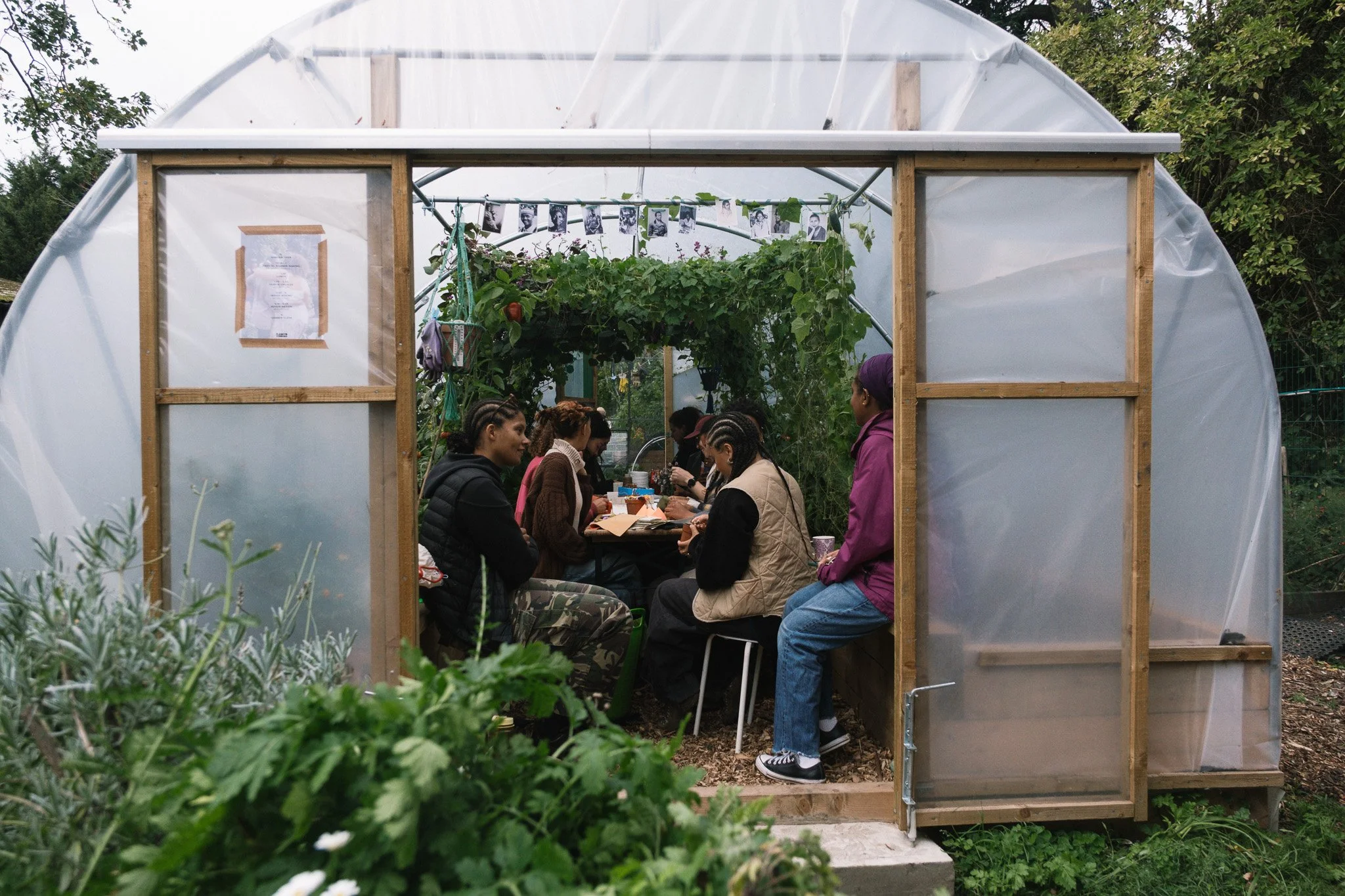
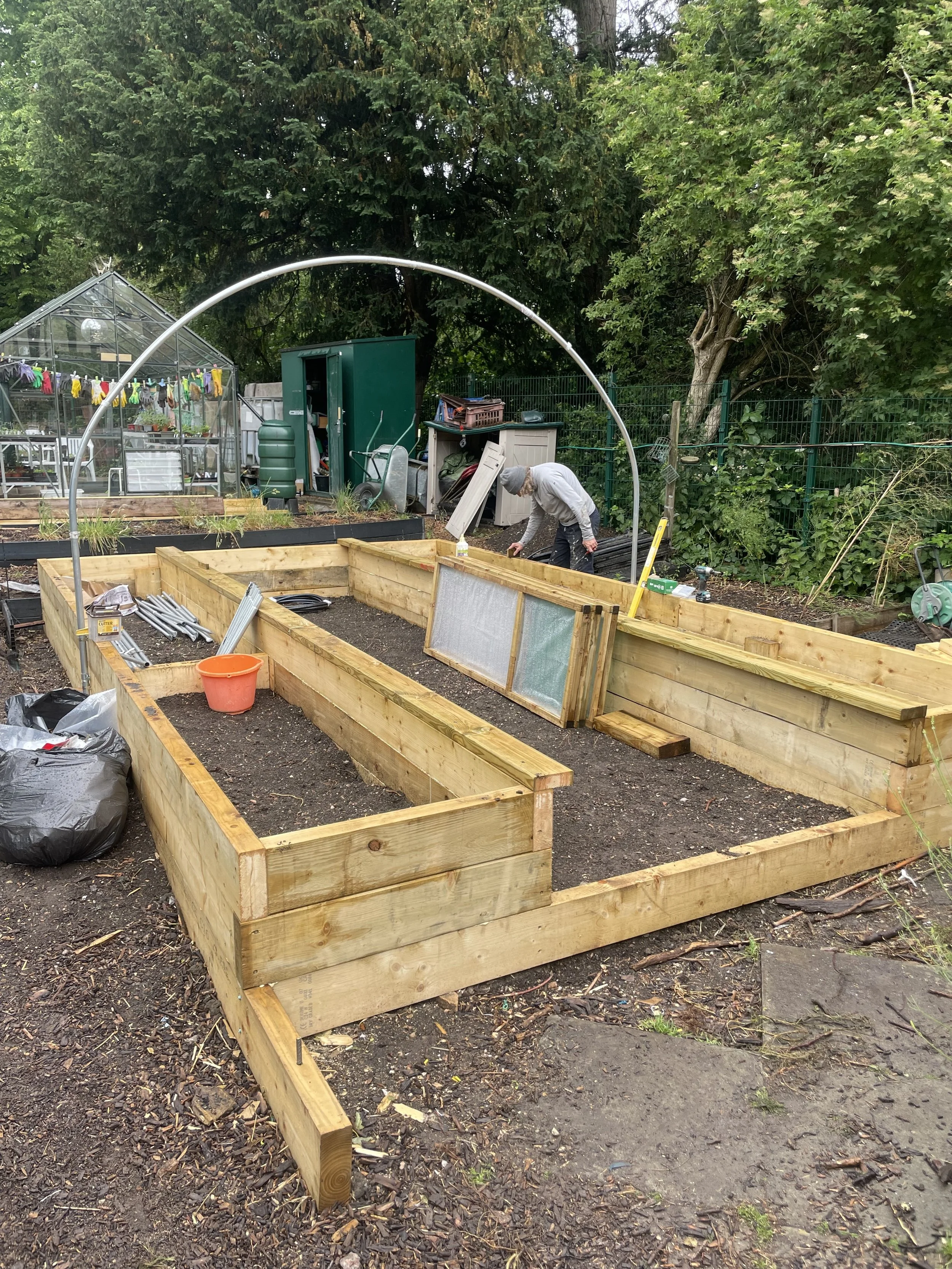
Built in spring 2025 with support from Southwark’s Cleaner Greener Safer Fund, the polytunnel provides a protected growing space that extends our growing season and supports year-round food production, while also serving as a flexible community gathering space. It was established just in time for our first summer harvest of crops including cerasee, aubergines, tomatoes, cucamelons, lemongrass, peppers, malabar spinach, Vietnamese coriander, Thai basil and many more plant friends.
-
![]()
POND
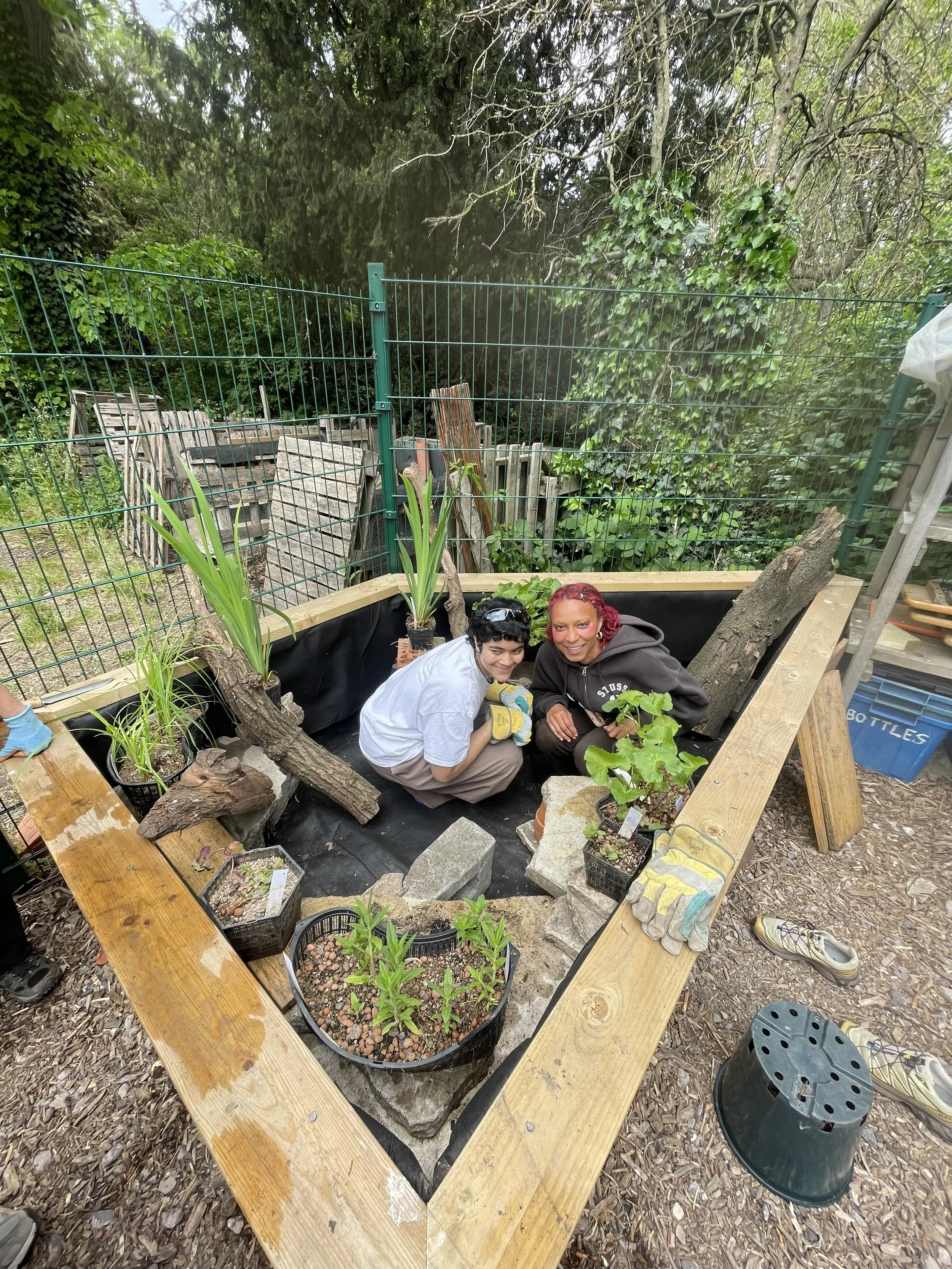
Built with CGS funding and planted with support from Froglife, our pond is now part of their London Blue Chain project (+map) which focuses on creating and improving habitats for amphibians and reptiles while supporting community engagement with local nature. A big thank you to Harry Forshaw and Diana Hernandez from the team for organising a community pond planting day with us in spring 2026. Since then, the garden has been full of life, with dragonflies arriving in abundance.
-
![]()
GLASSHOUSE
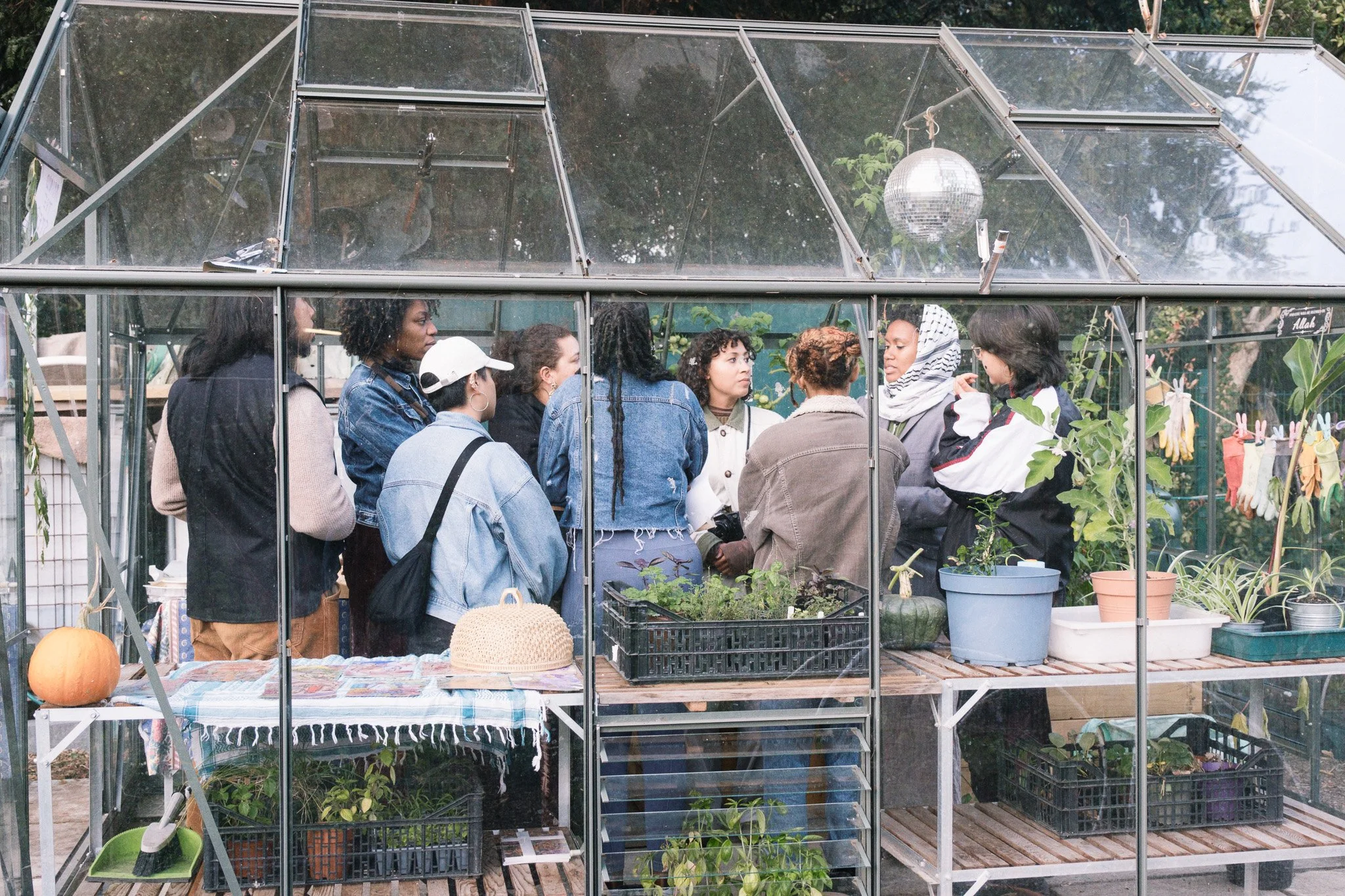
Built in winter 2024 with support from Friends of Dulwich Park, Sal Chebbah and Charles Dowding, the glasshouse was completed just before welcoming the first volunteers onto the land. It serves as our main seedling-raising space and now also includes two raised beds for growing heat-loving crops in the summer and greens through winter. We’re trialling growing sweet potatoes grown in bags inside there this season.
-
![]()
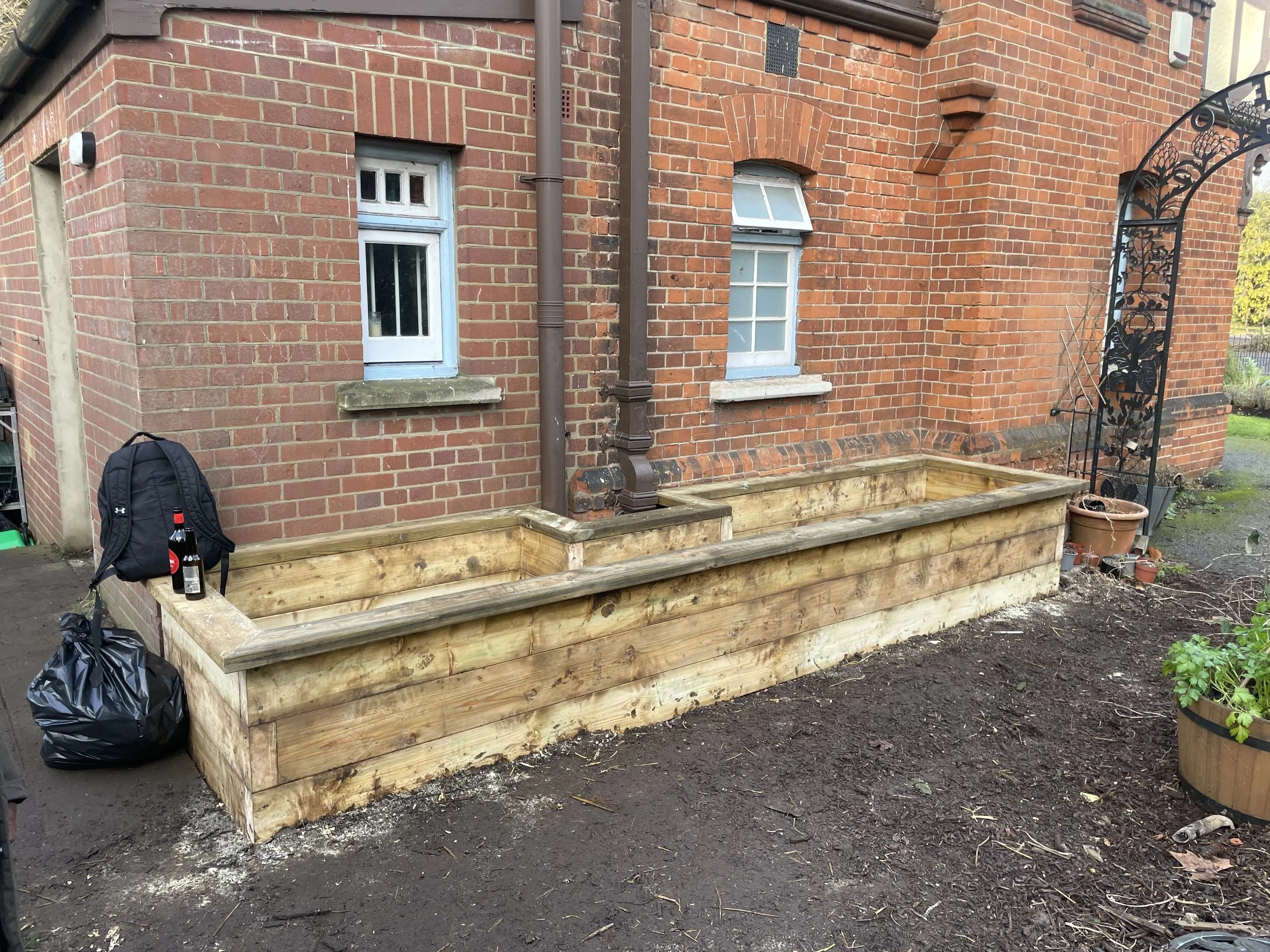
RAISED BEDS
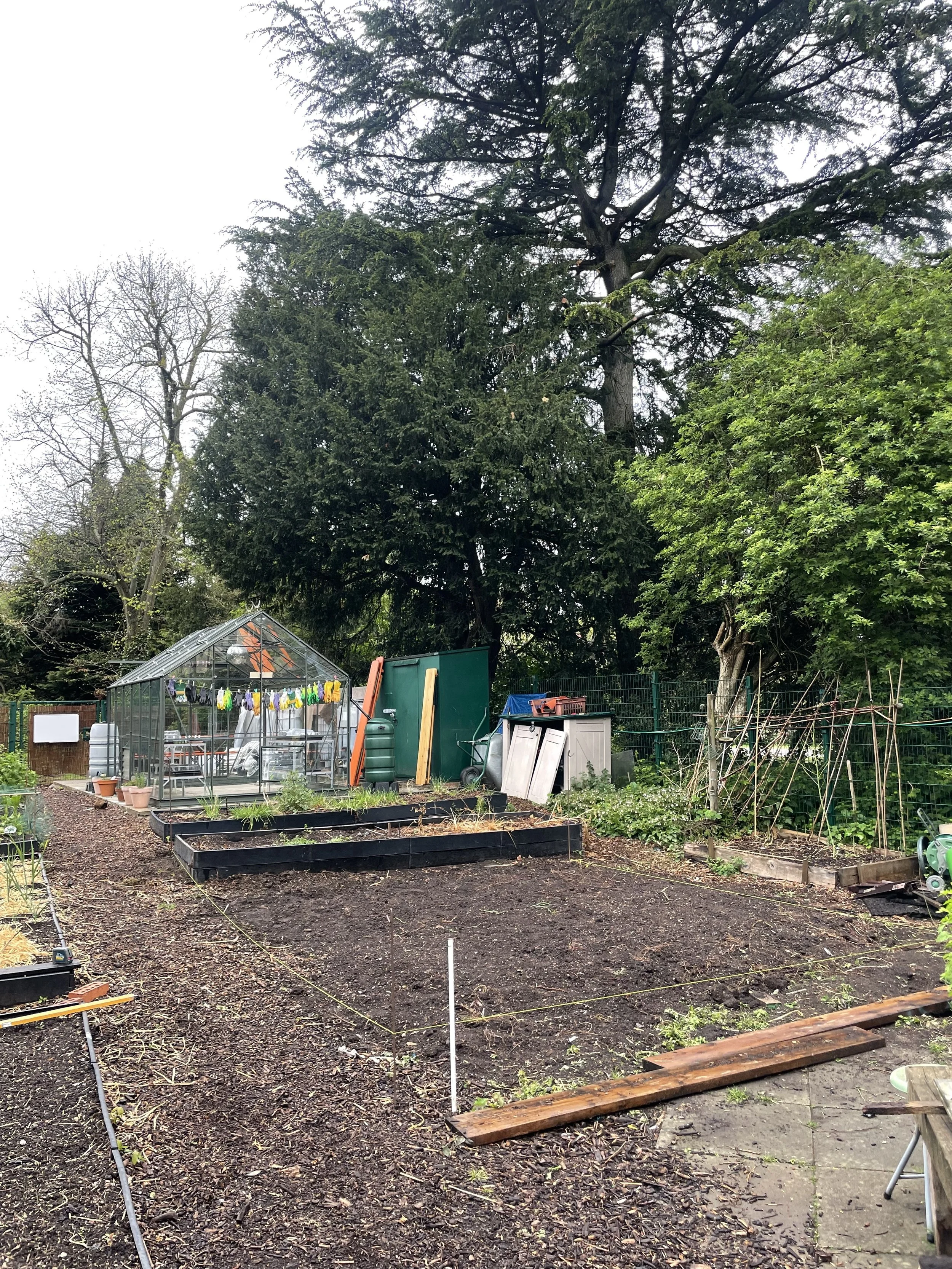
We are gradually phasing out plastic use across the garden, repairing existing beds and building new ones to expand growing space across the site. This summer, we’re also looking forward to creating more imaginative and creative plant signage throughout the garden with scrap wood.
prepping ground for polytunnel foundations, april 2025
foundation and beds formed. may 2025
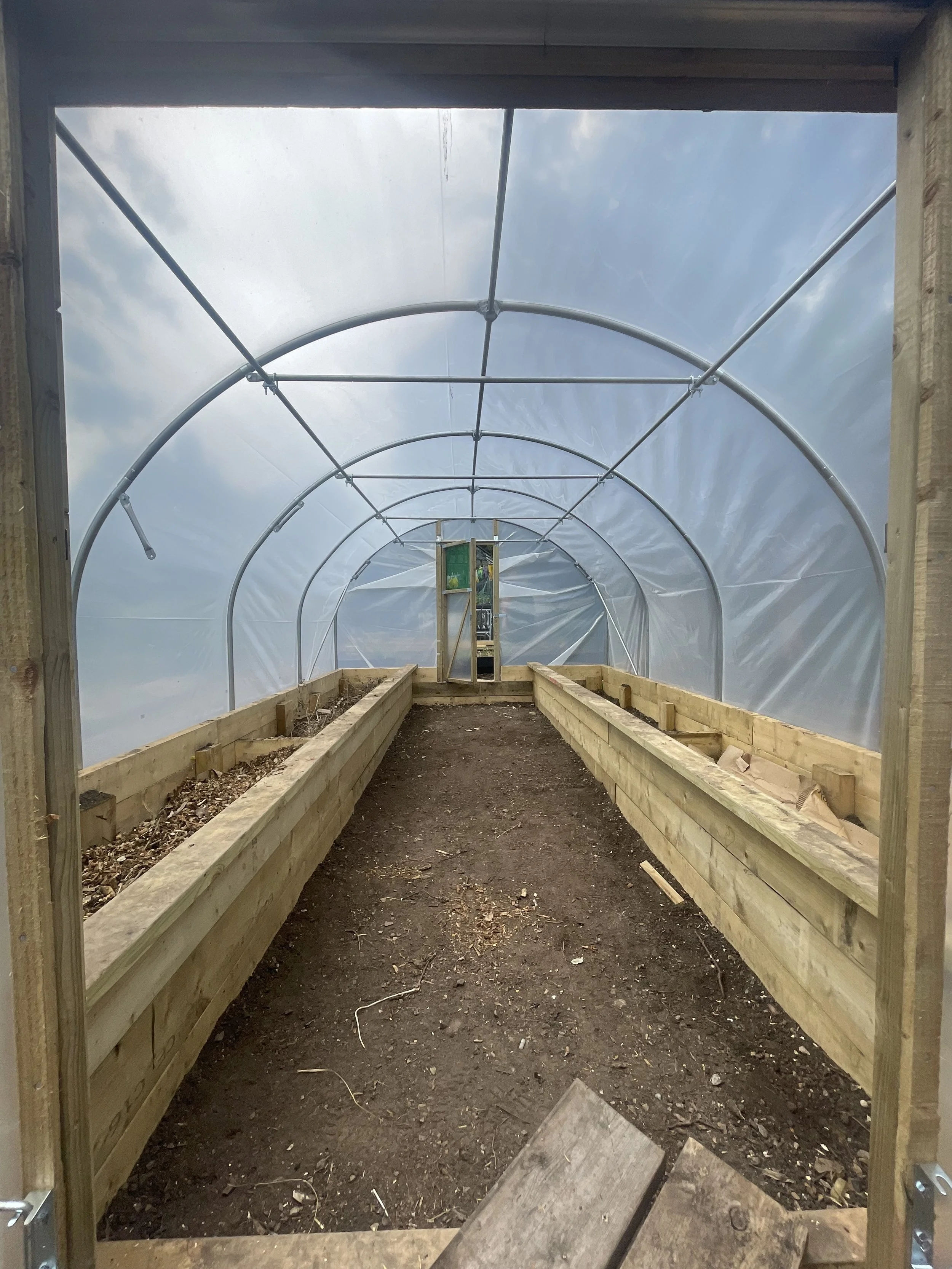
plastic on and bed ready to fill with greenwood trunks and branches, debris, cardboard, woodchip and compost
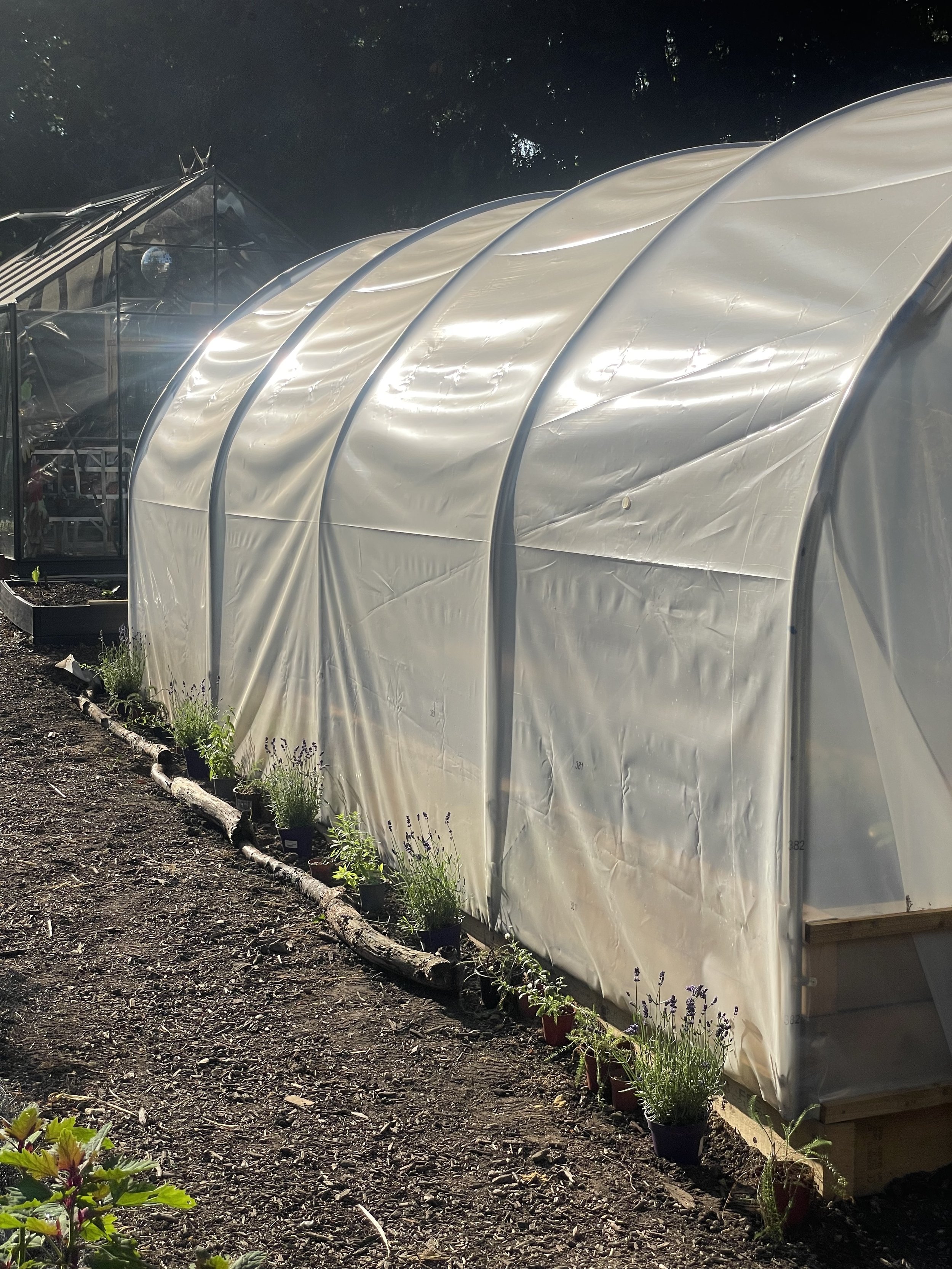
planting outside the tunnel, june 2026
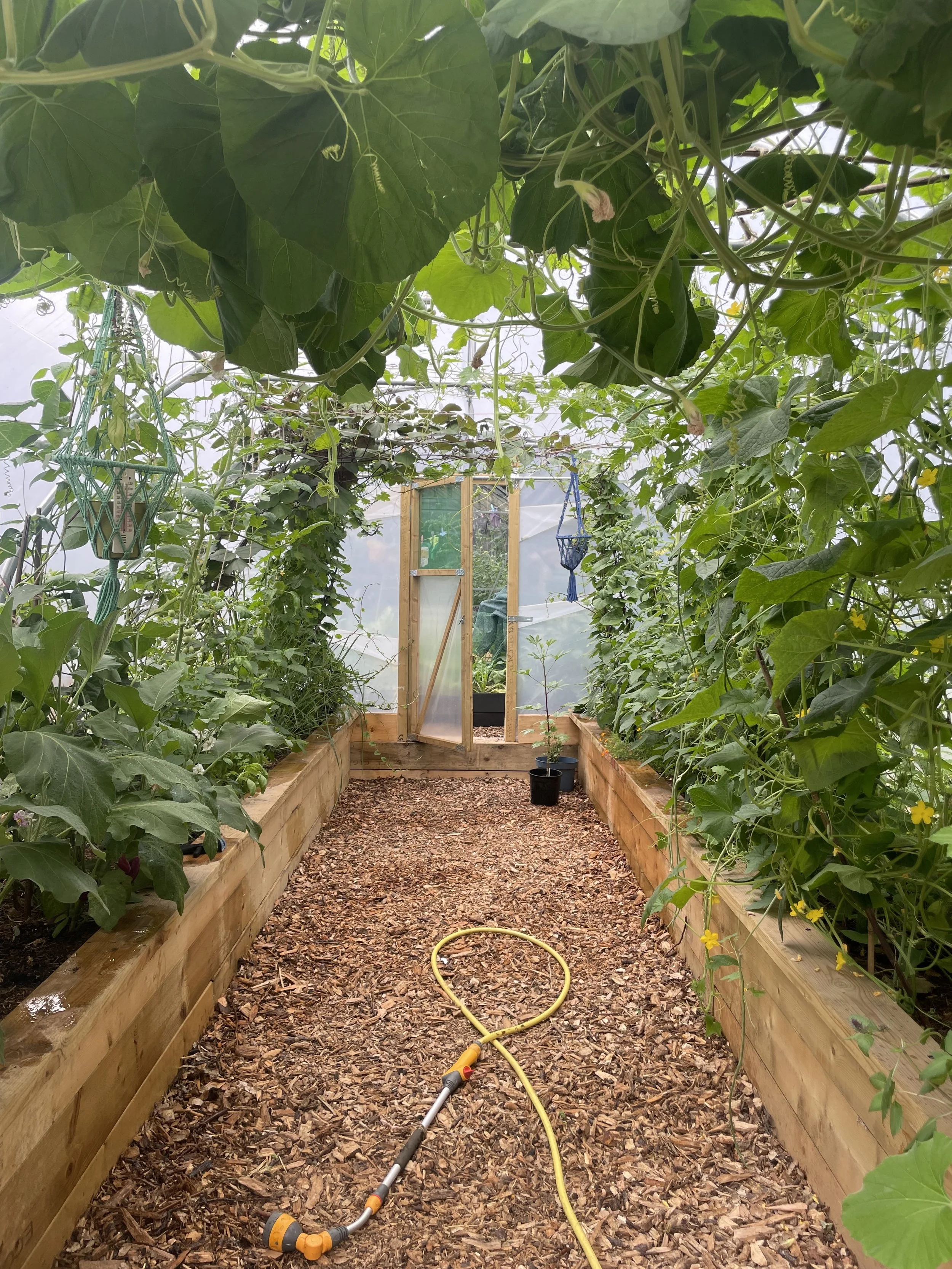
growing, july 2026
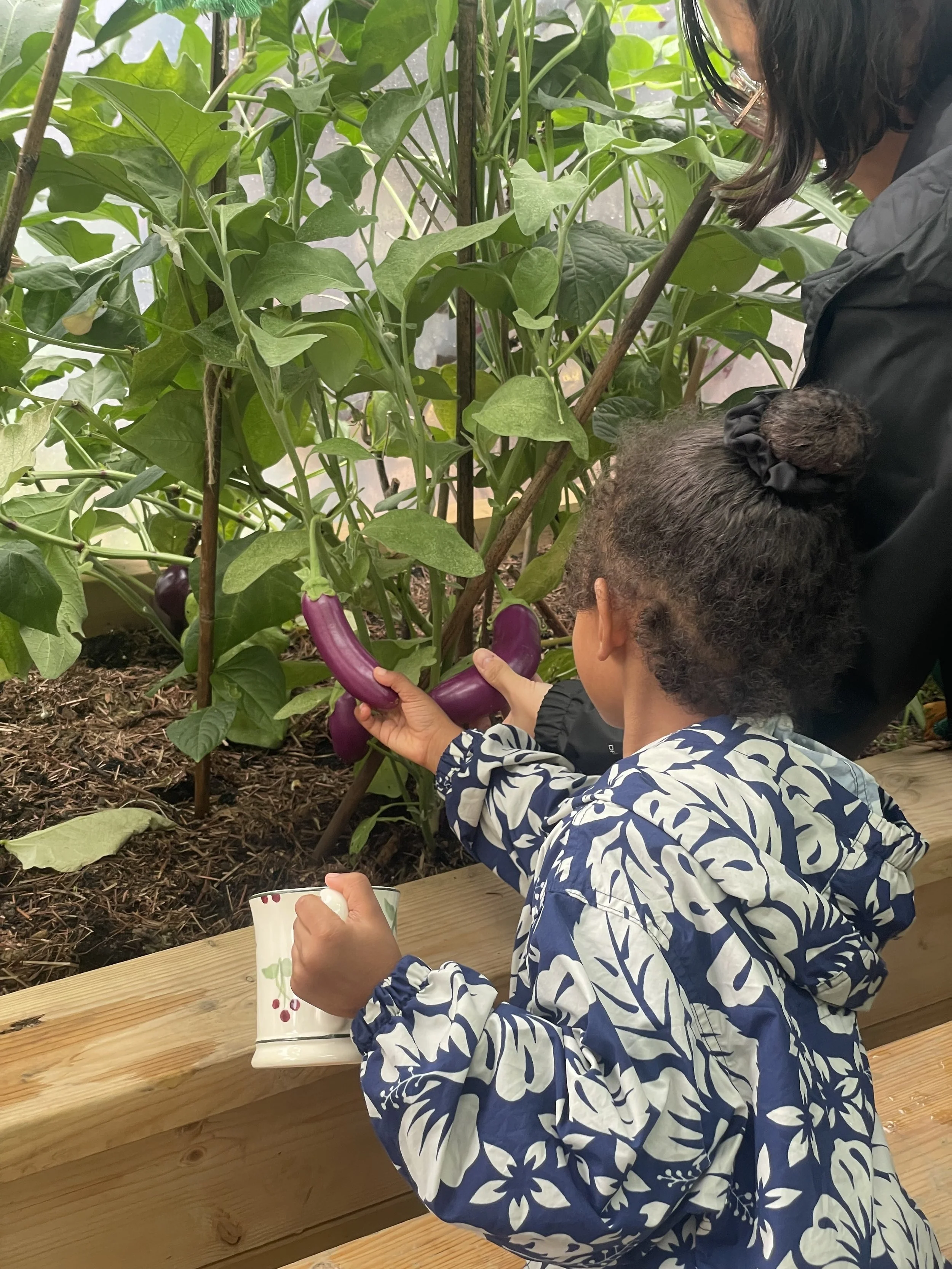
what this project is all about! september 2026
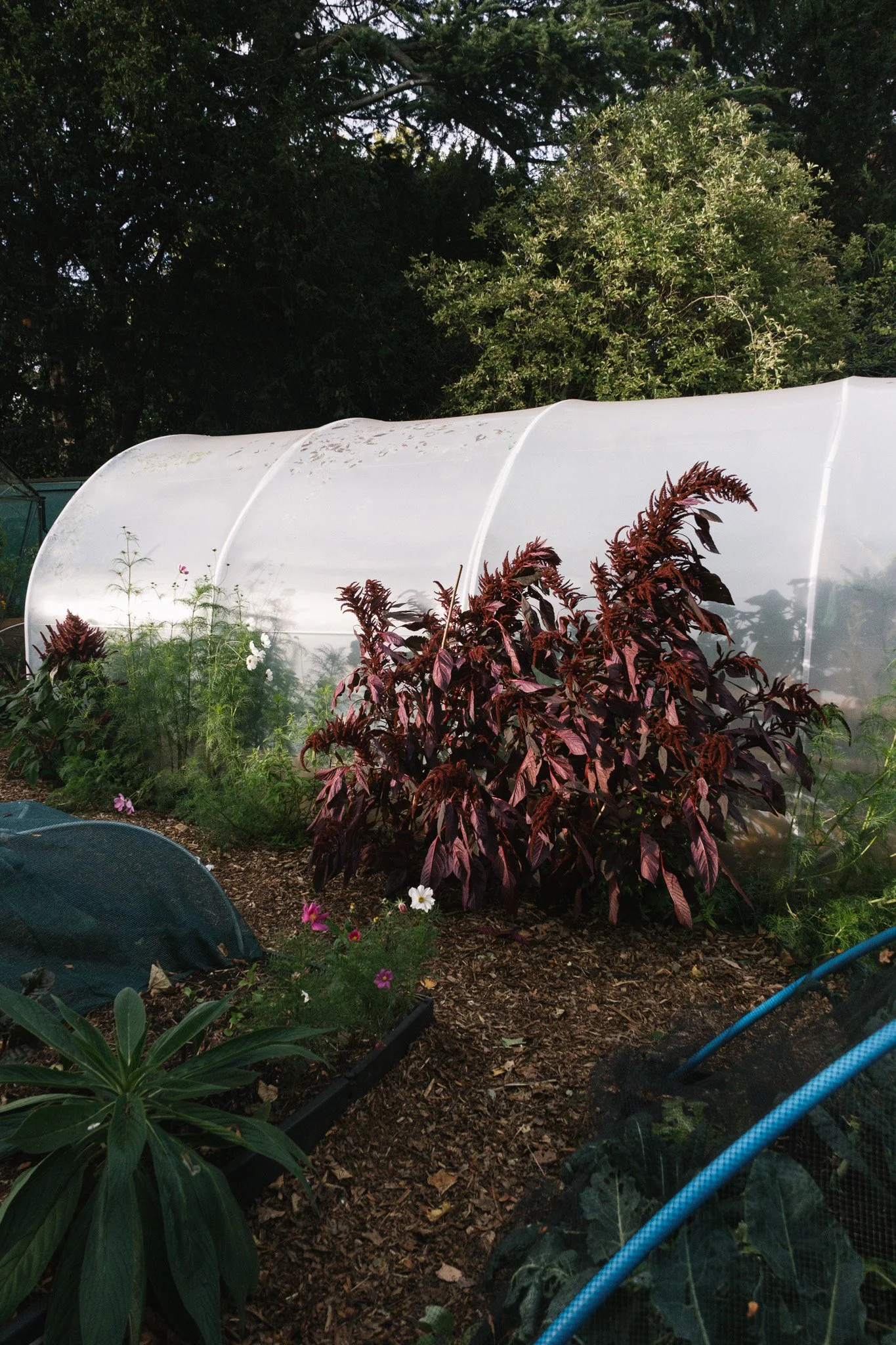
full border of cosmos, lavenders, amaranth, callaloo, lemon verbena + more. october 2026, image by randa toko
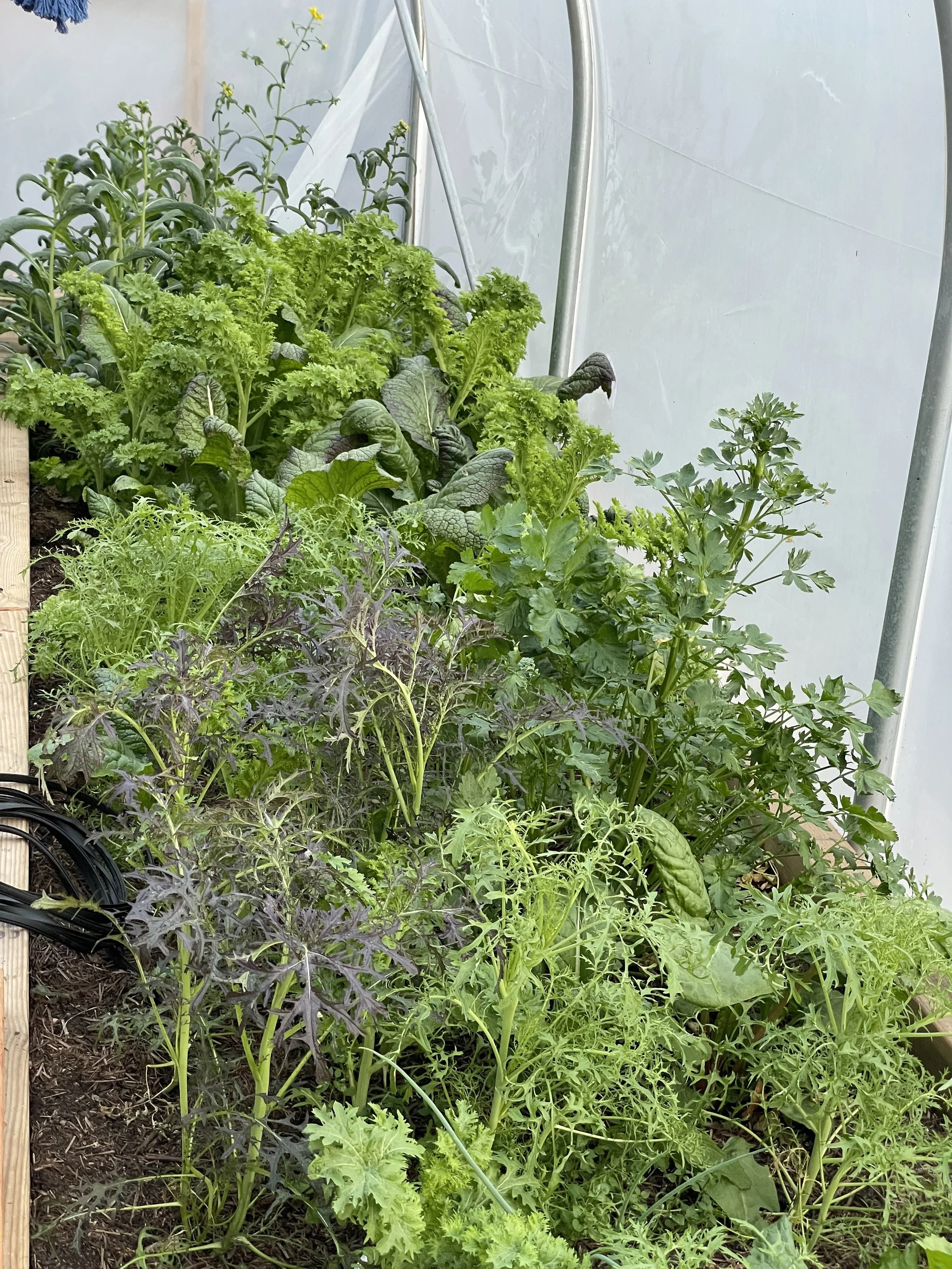
winter growing in the tunnel. feb 2026
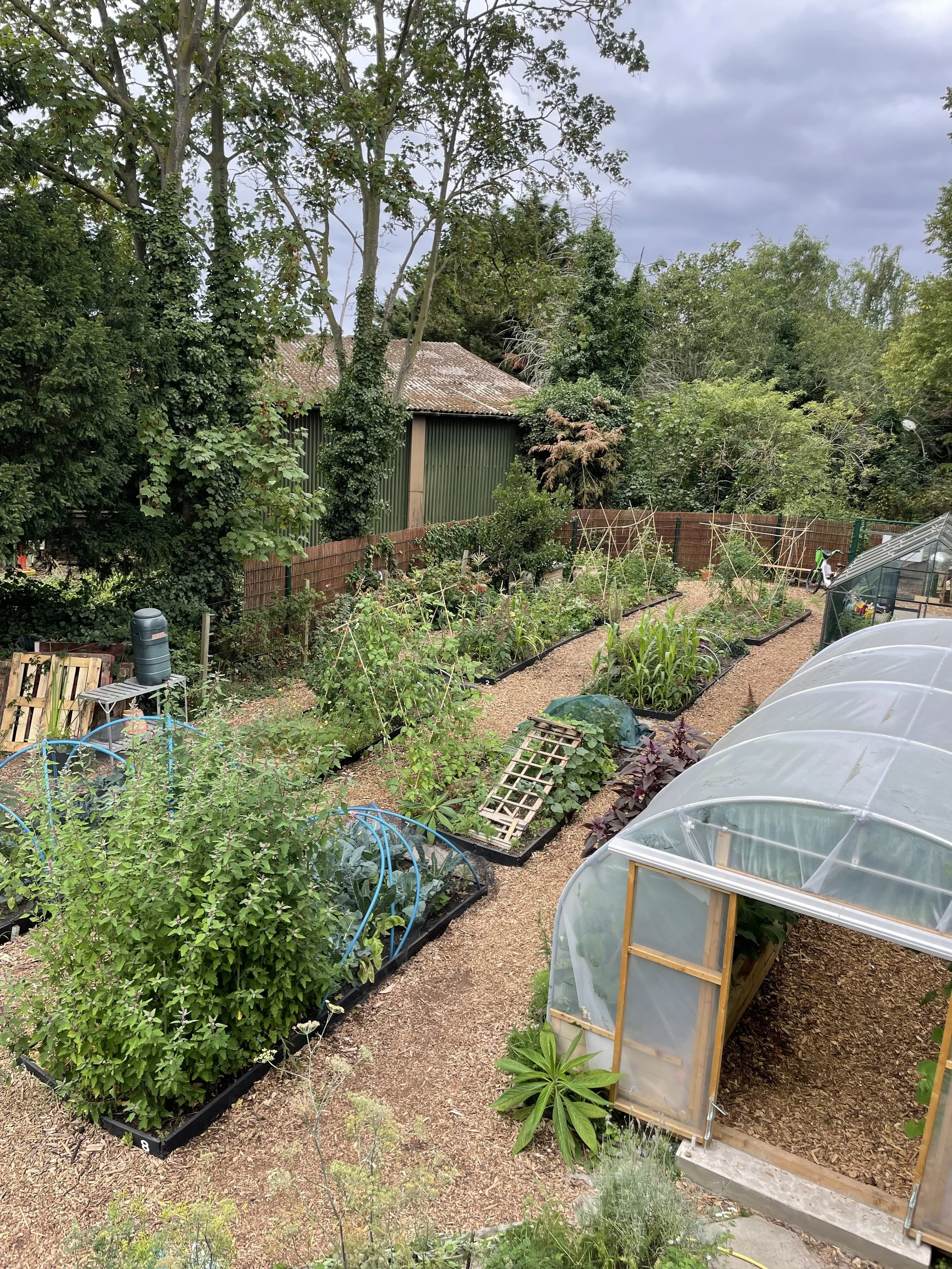
landview. summer 2025
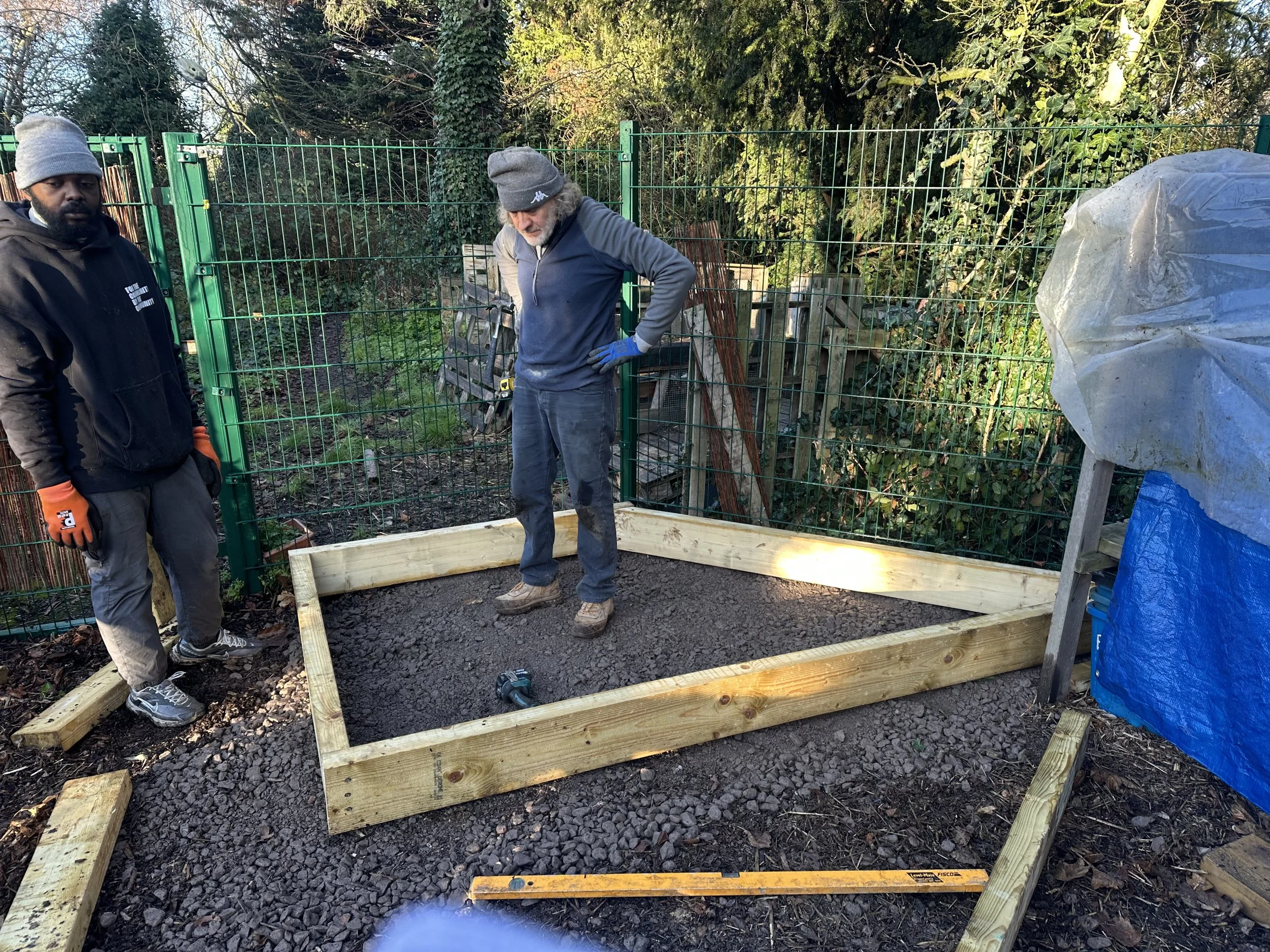
pond foundations. feb 2026
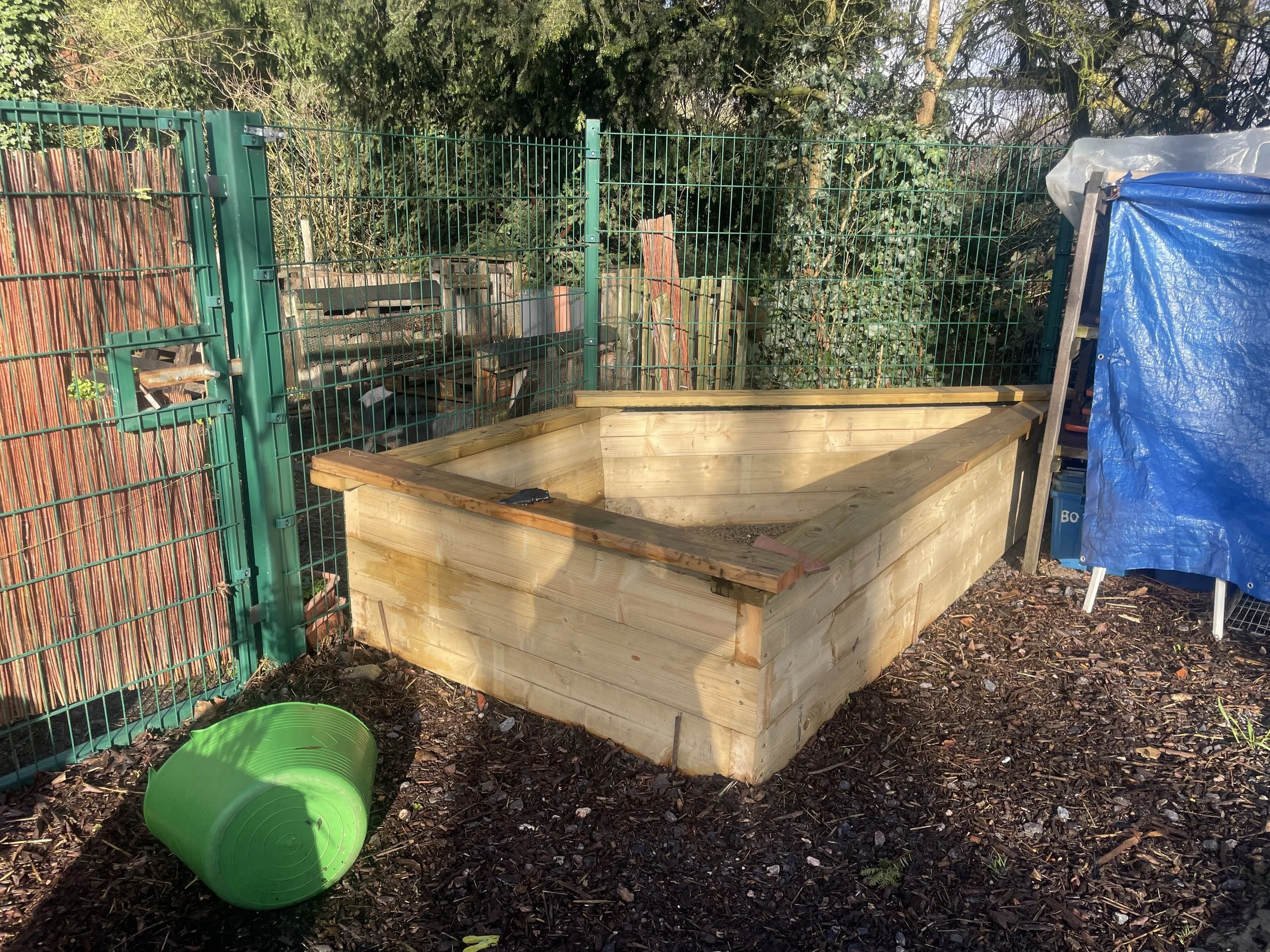
pond built! march 2026
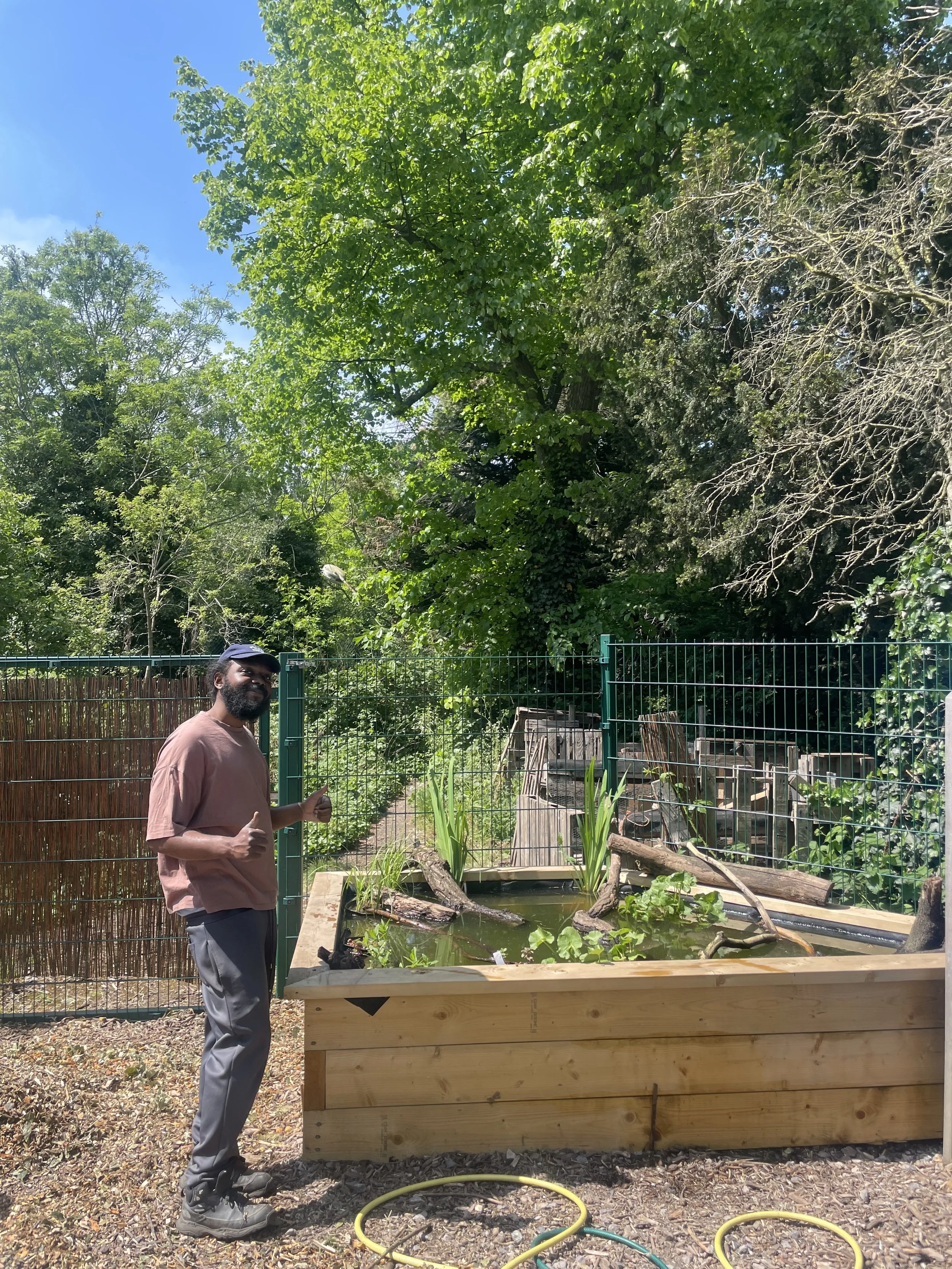
pond liner in, plants in, water in. may 2026
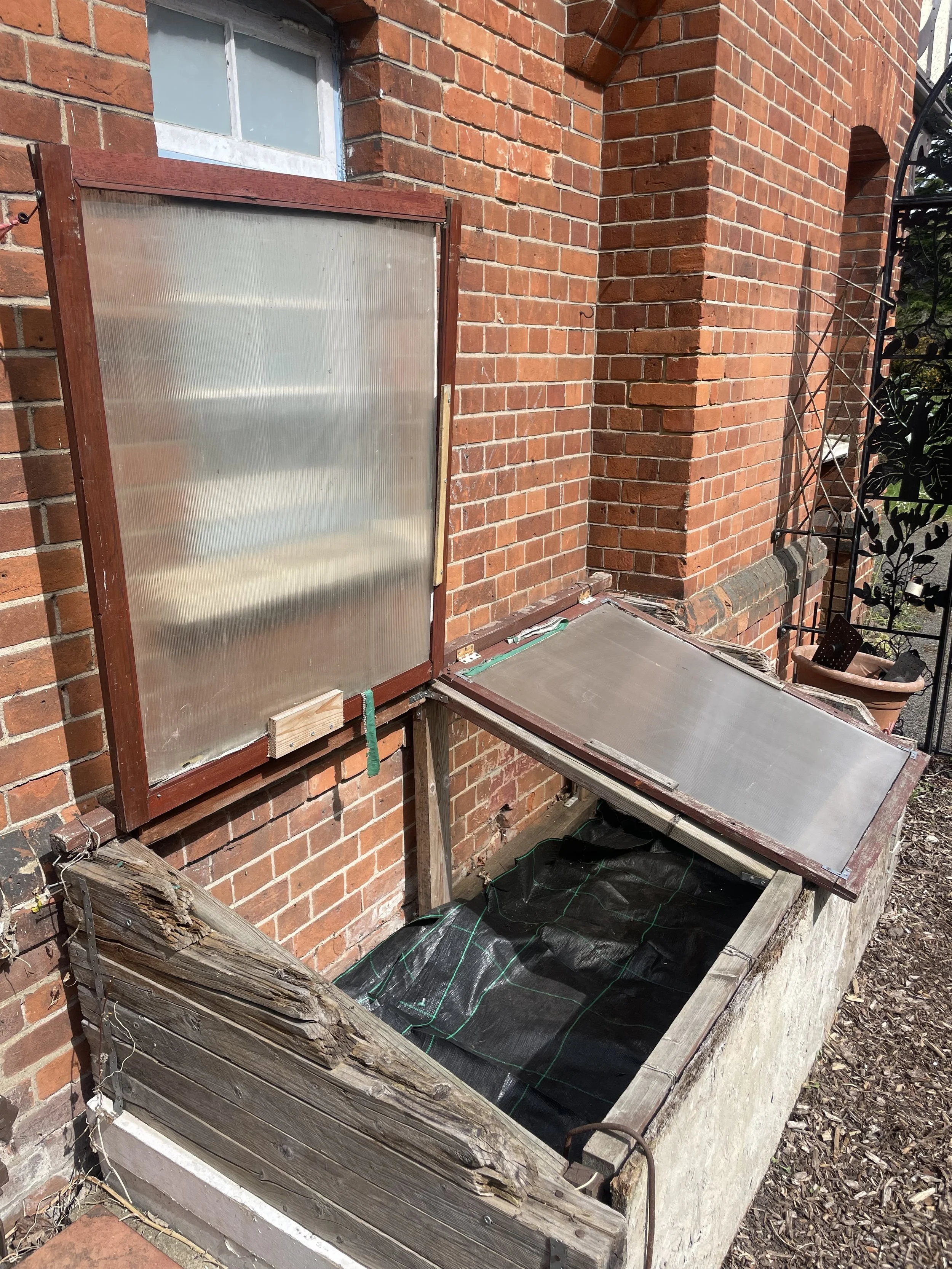
salvaged coldframes we inherited
coldframes removed for a warmth-loving bed. feb 2026
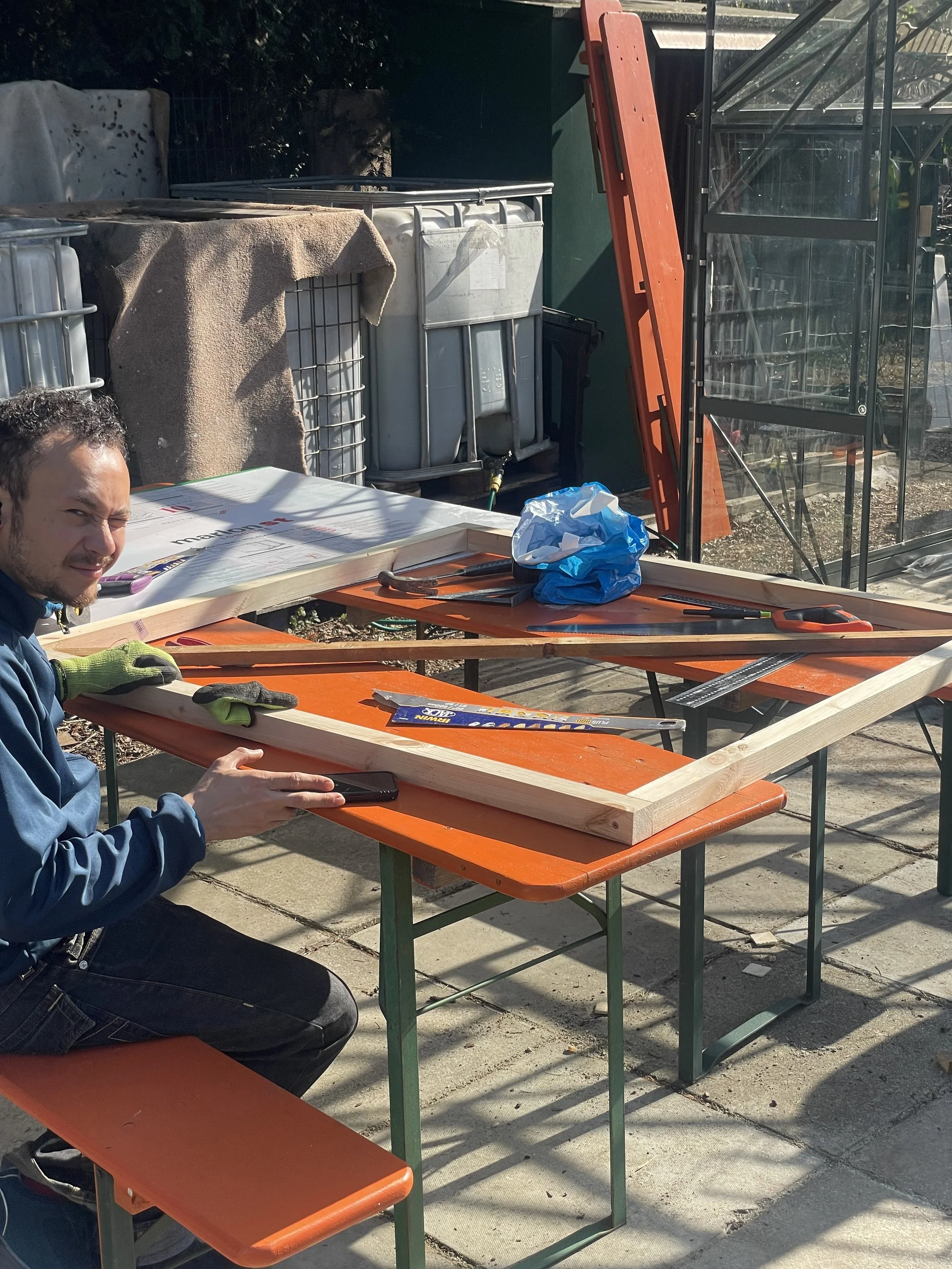
harry on the job
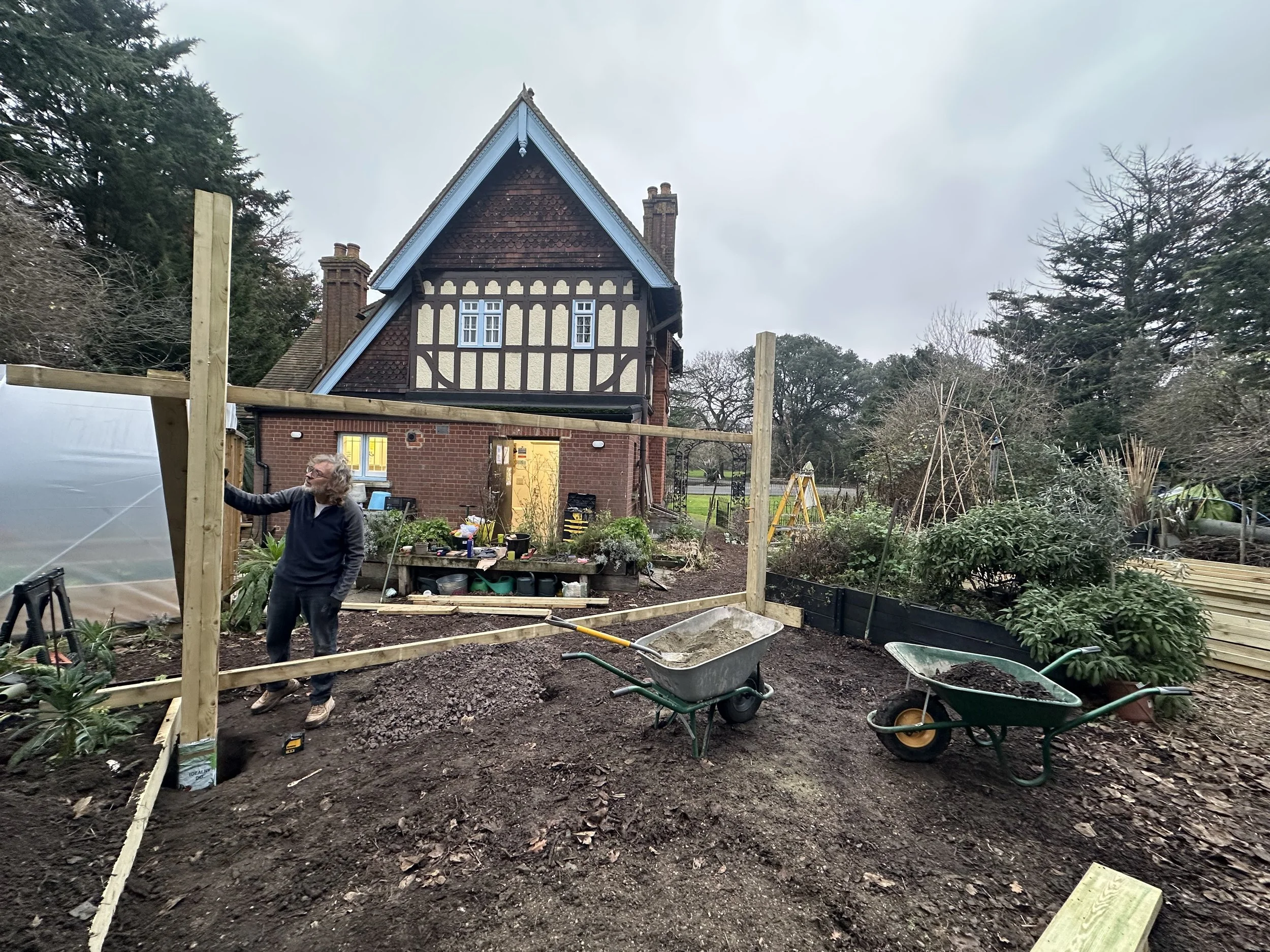
seating area build, december 2025
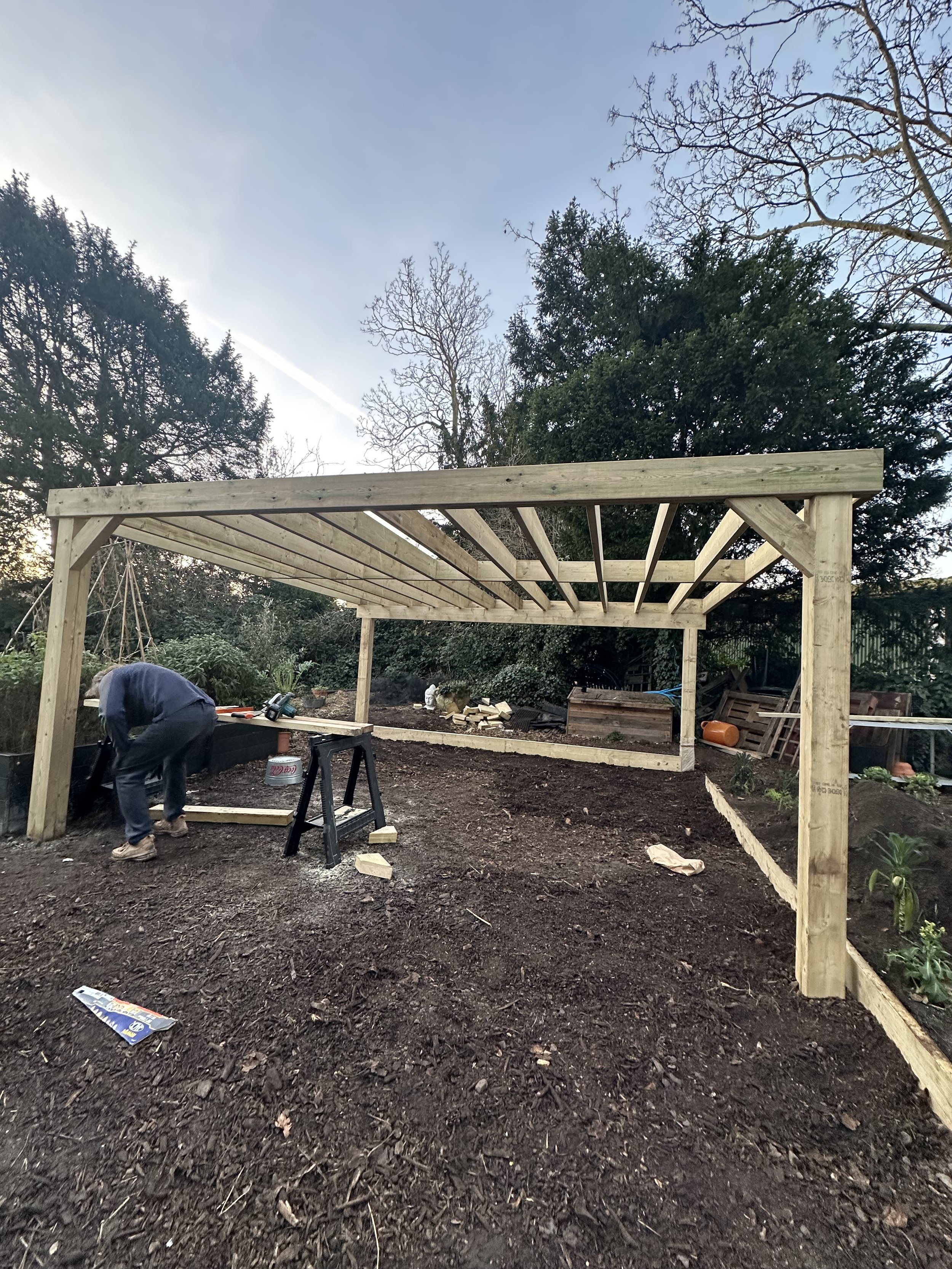
seating area taking shape.
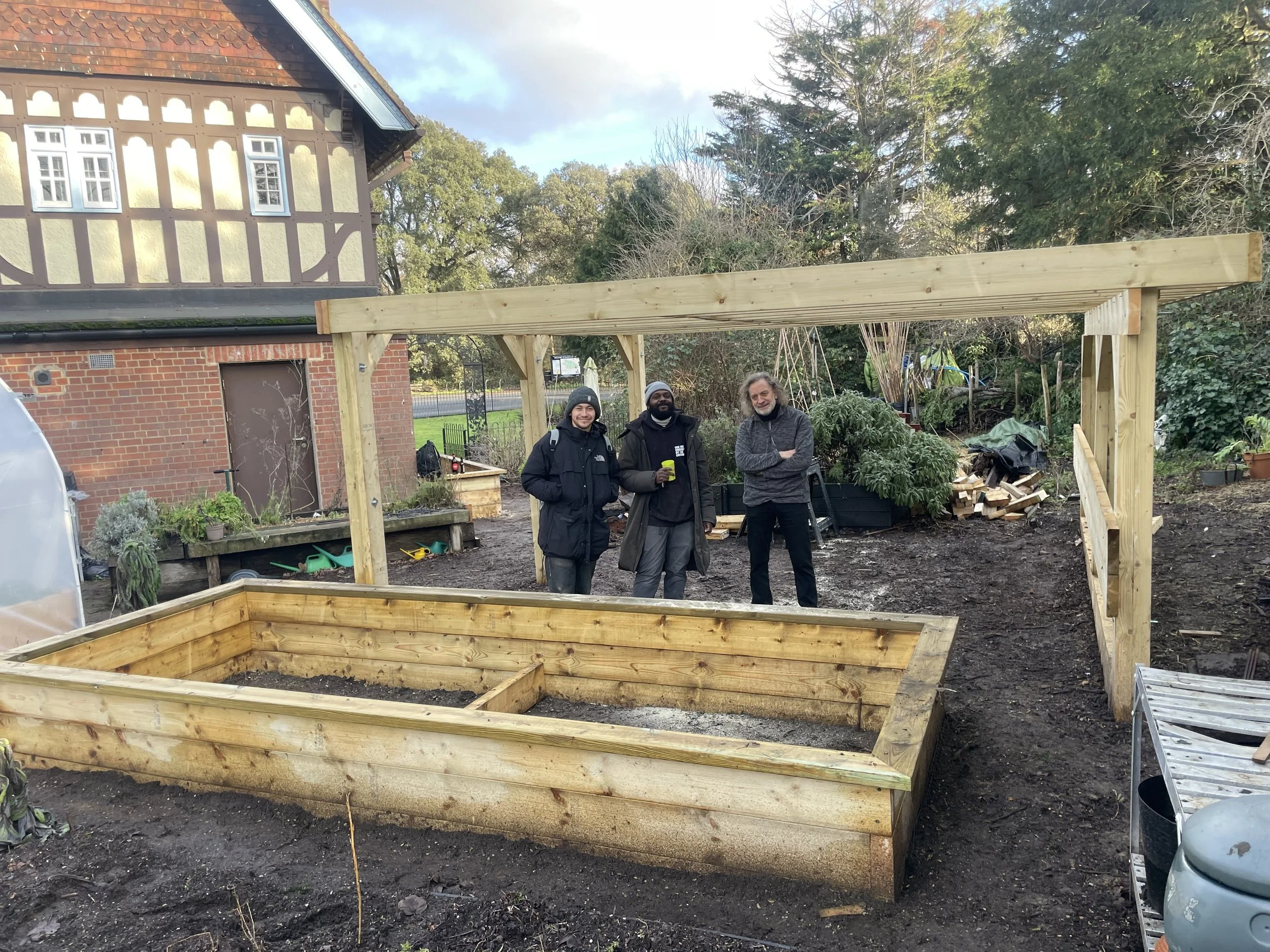
seating area and new raised bed - complete! feburary 2026
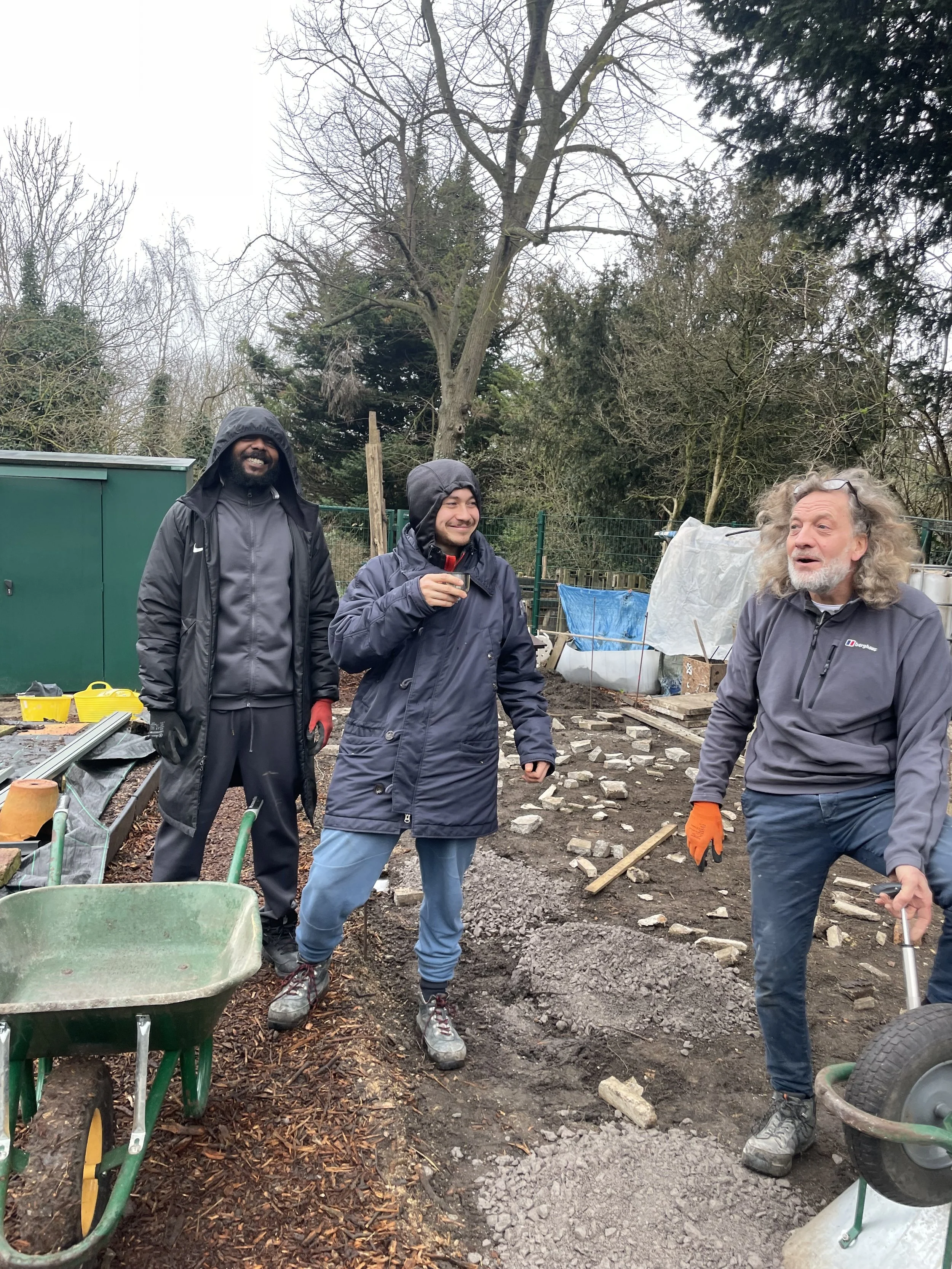
left to right: kieron, harry and bill - on job!
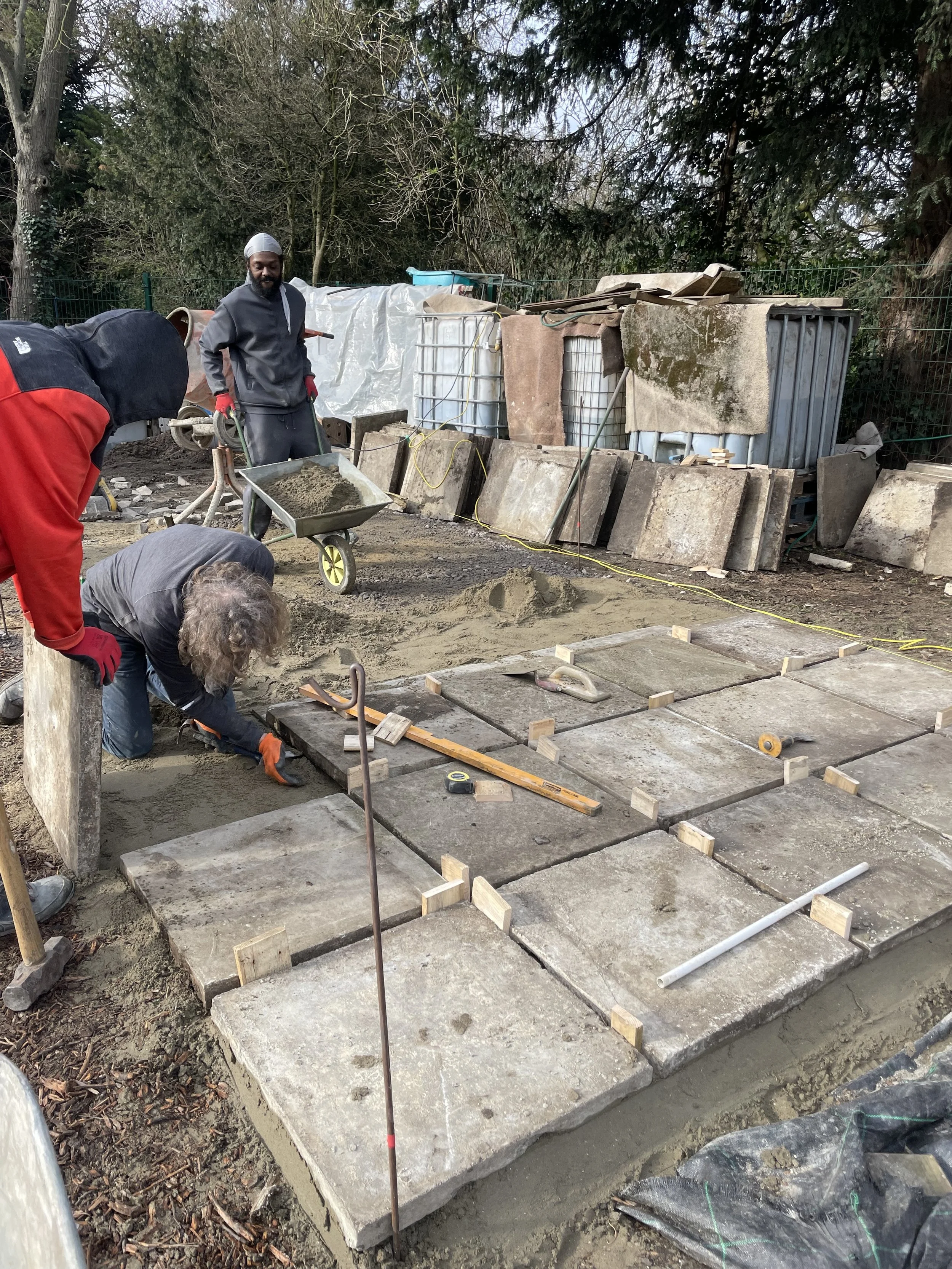
glasshouse foundation building. february 2024
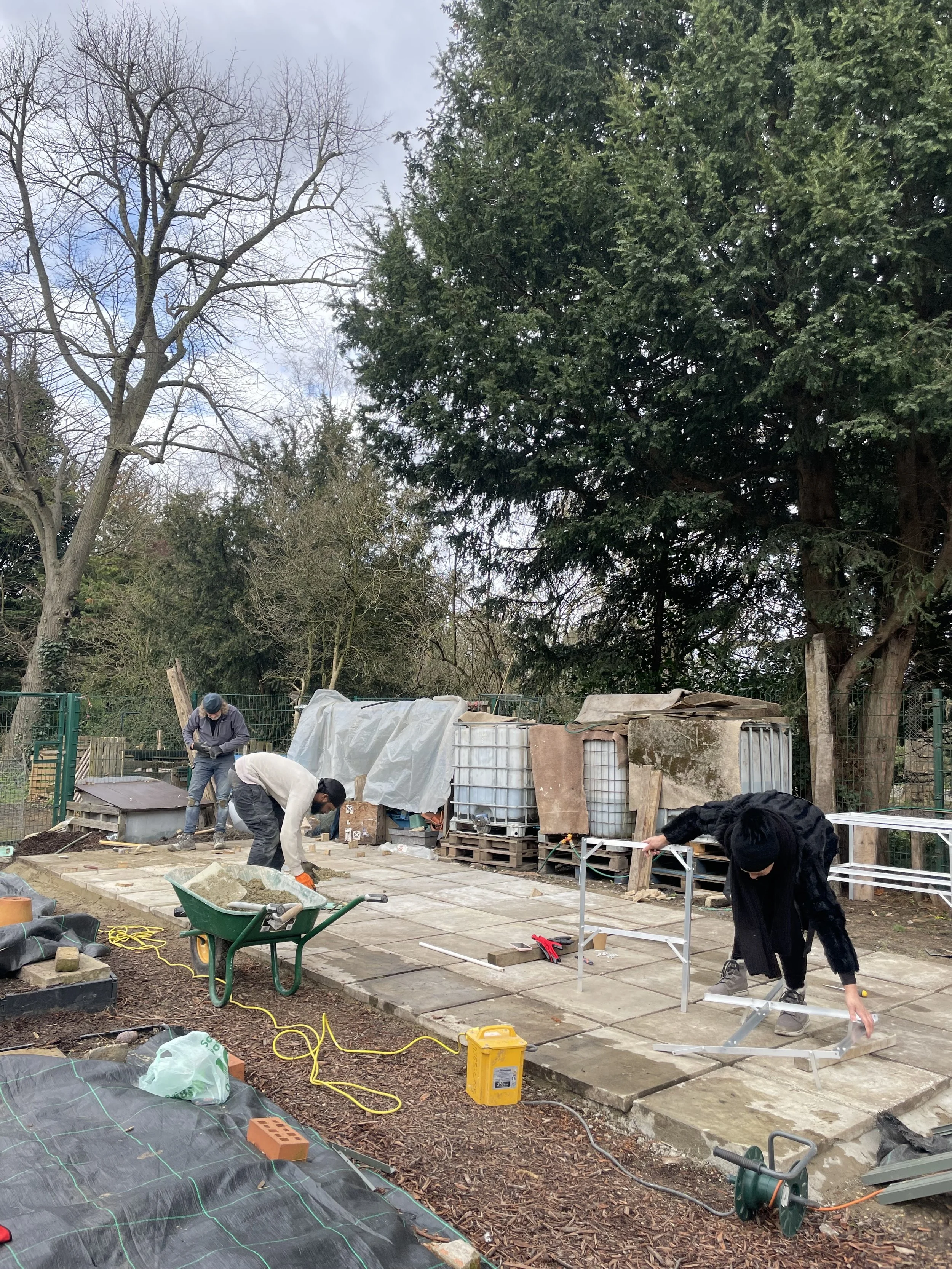
takes a village, february 2024
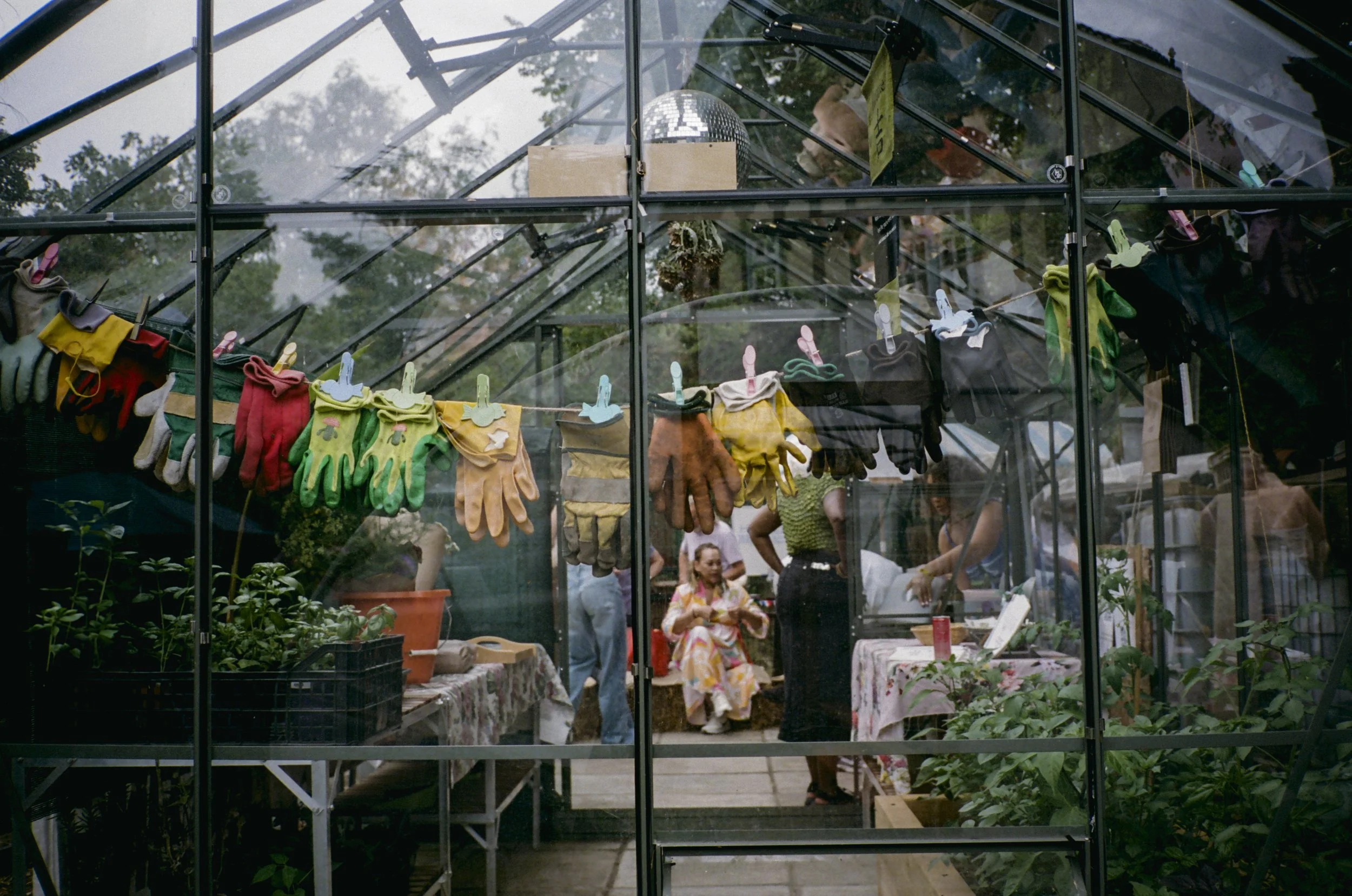
glasshouse view, july 2025. image by bardha krasniqi
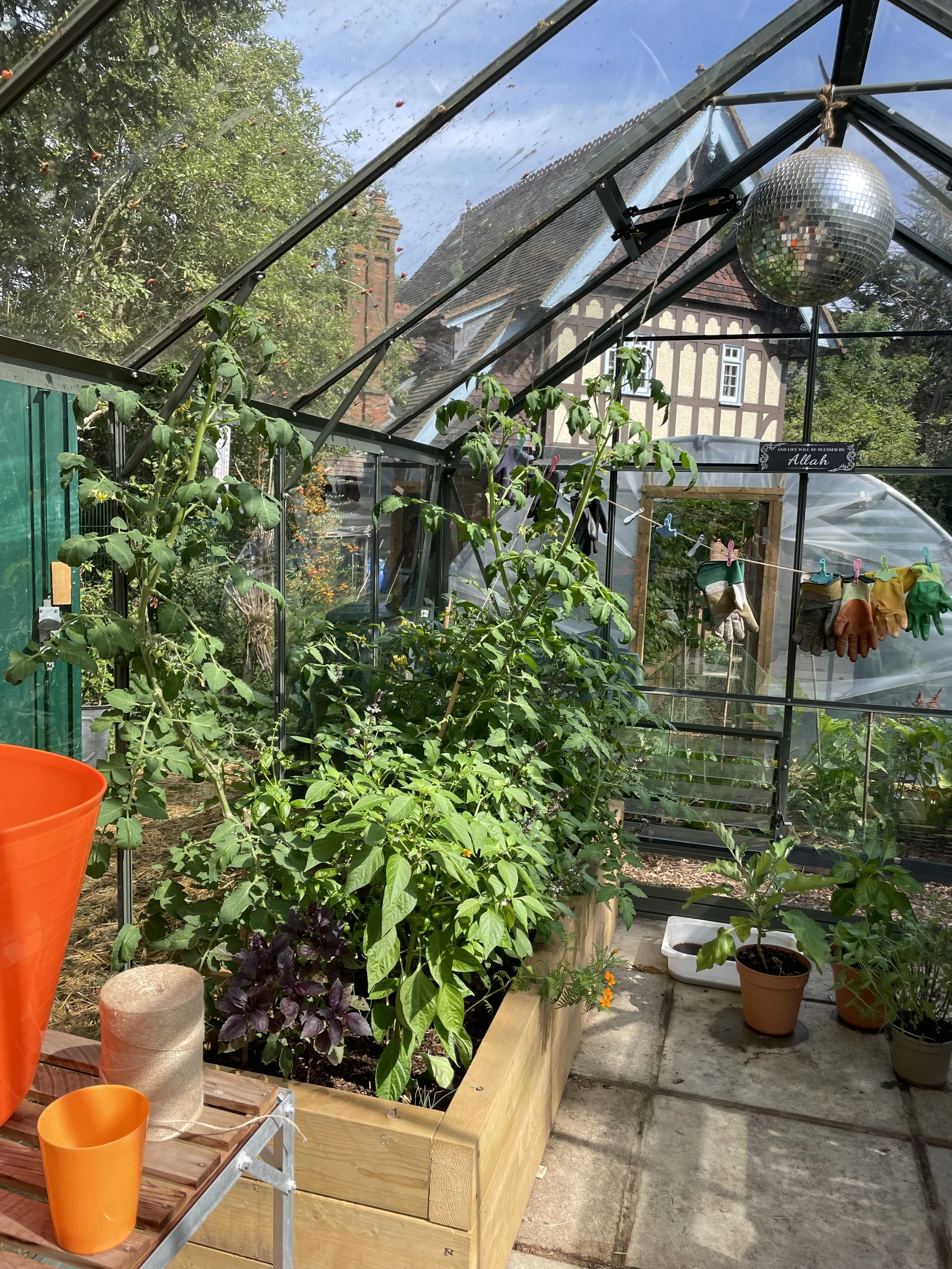
glasshouse thriving, summer 2025
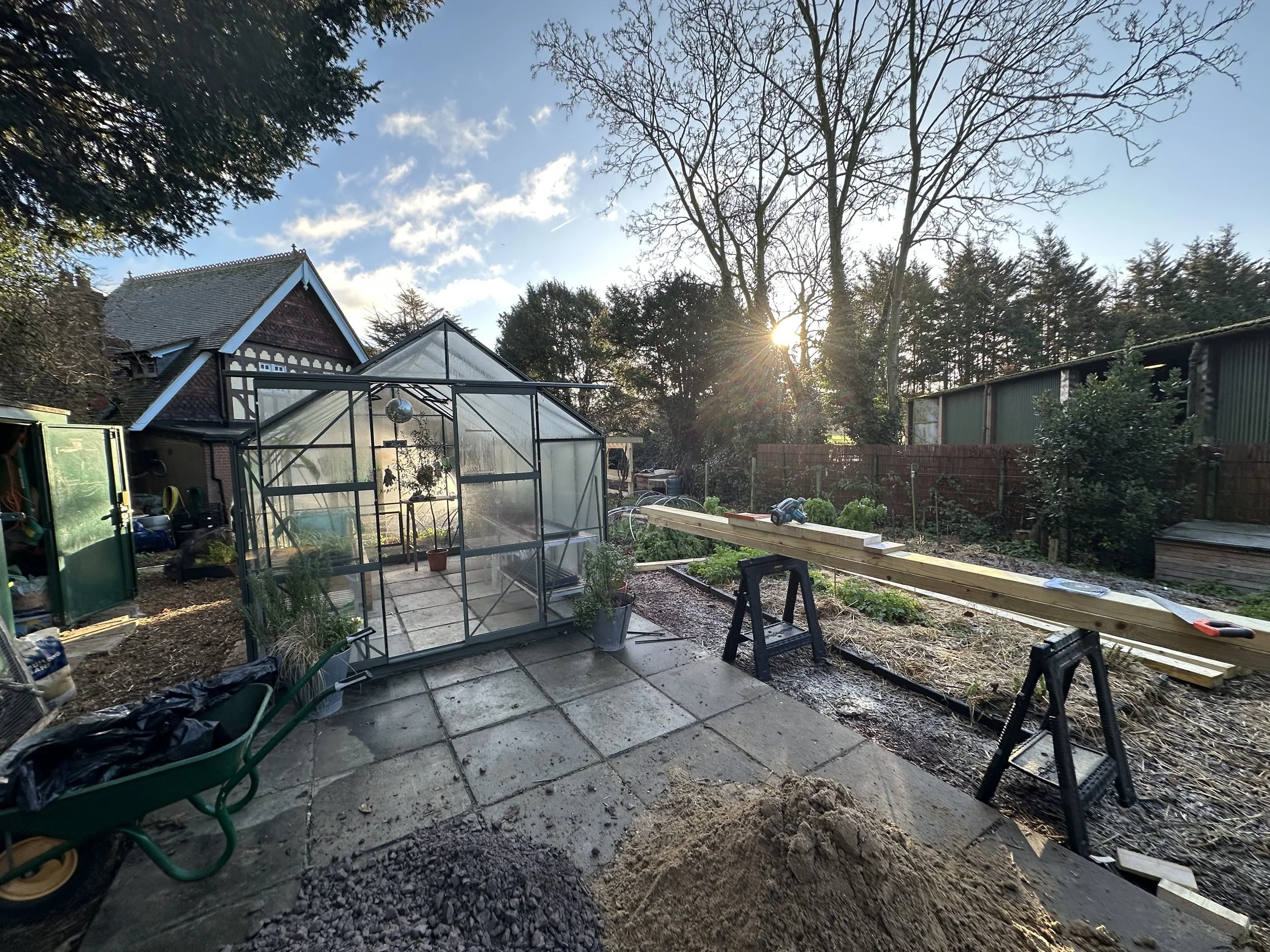
glasshouse on a winter's day. january 2026